Australia’s industrial relations landscape has shifted significantly over the past 18 months, with real implications for organisations operating in high-risk industries such as mining, construction, manufacturing, transport, and logistics. Enterprise bargaining is becoming more complex, Commission powers have expanded, and the volume of disputes is increasing, placing greater pressure on employers to get both process and decision-making right.
In this session, Brooke Hurt, Managing Director of Jessie Grace People & Culture, breaks down what is actually changing and how it is playing out in practice. From intractable bargaining and Fair Work Commission intervention through to AI-driven complaints and rising general protections claims, this webinar provides a clear, practical lens on how to manage risk, maintain compliance, and protect workplace culture in a more demanding environment.
Webinar Transcript
Transcription Auto Generated.
Welcome, everybody, and thank you for joining our first Jessie Grace webinar. My name is Brooke Hurt, and I am the Managing Director of Jessie Grace People & Culture. We are a people and culture firm with a strong purpose of enhancing workplace happiness.
Today’s session focuses on navigating Australia’s industrial relations landscape in high-risk industries. While we might frame this as a light discussion, we are covering complex and evolving topics including enterprise bargaining, intractable bargaining orders, AI-driven disputes, and the increasing volume of matters before the Commission. If the industrial relations landscape feels more intense lately, you are not imagining it. Things are shifting faster than they have in years. What was once manageable is now more formal, more structured, and at times more unpredictable. We are also seeing new influences, including AI, shaping how workplace issues are raised and escalated.
This session is about making sense of those changes, understanding what they mean for your organisation, and how to stay ahead without losing your culture in the process. At its core, it is about continuing to build workplaces that are respectful, connected, and human, even as the system becomes more complex.
Jessie Grace was named after my grandmother, who had an exceptional ability to connect with people. She listened deeply, responded with empathy, and made every person feel valued. That philosophy underpins how we operate. Our goal is to bring that same authenticity into every interaction and into the workplaces we support. We all know the saying that people may not remember what you said, but they will remember how you made them feel, and that is central to how we approach people and culture.
Over the past 18 months, the industrial relations landscape has shifted significantly. Commission powers have expanded, bargaining has been reshaped, and compliance risk has increased, particularly in high-risk industries. This is not just a legislative change. It is a shift in how organisations need to operate. Organisations that respond with structure, strong people frameworks, and alignment to their values will navigate this well. Those that do not will feel the impact through increased risk, cost, and pressure on workplace culture. Now is the time to understand your position and strengthen it.
The Fair Work Commission is no longer just a back-end tribunal. It is becoming more active in shaping outcomes, particularly in bargaining and dispute resolution. The Fair Work Ombudsman is also increasing its focus on compliance through education, monitoring, and enforcement. There is greater scrutiny on payroll accuracy, classification, and contractor arrangements, as well as increased consequences for organisations that are not meeting their obligations. From a Jessie Grace perspective, if your foundations are not strong, including contracts, pay practices, and systems, the Ombudsman will guide and realign this for you. This is where prevention matters more than reaction.
We are also seeing a significant shift in psychosocial safety. In New South Wales, there has been substantial investment into enforcement, with dedicated inspectors and advisory services focused on psychosocial risk. This has moved from being a cultural conversation to a compliance requirement. Organisations must now be able to demonstrate how they are managing psychological risk in the workplace, not just talk about it.
Enterprise bargaining is becoming more complex due to competing pressures. Rising cost of living and sustained inflation are increasing expectations from employees, while productivity growth has not kept pace. This creates tension between employees and employers and increases the likelihood of disputes and escalation into the Commission. We are seeing greater disconnect between wage expectations and organisational capacity, which is driving more structured and, at times, more contentious negotiations.
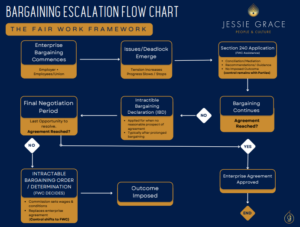
One of the most significant changes is the introduction of intractable bargaining. Previously, if parties could not reach agreement, the outcome remained with them. Now, the Commission can step in and determine the outcome, including wages, conditions, and terms. This represents a major shift in bargaining. It is no longer just about whether you can reach agreement, but what happens if you cannot.
AI is also changing how workplace issues are raised. We are seeing situations where a performance conversation occurs, and within minutes a formal complaint is generated using AI tools. What was intended as a supportive conversation can quickly be reframed as a legal issue. The risk is not the tool itself, but how quickly situations can escalate. What protects organisations in these moments is not polished language, but clear documentation, accurate timelines, and consistent decision-making. The basics still matter.
Adverse action claims are increasing and carry significant risk. These claims focus on why an action was taken, not just what happened. The burden of proof often sits with the employer, and even well-intentioned decisions can become high risk if they are not clearly documented and defensible. This reinforces the importance of strong systems, clear reasoning, and consistent processes.
We are also seeing a significant increase in disputes across the Commission, including unfair dismissal, general protections, and flexible work matters. While most disputes are resolved through conciliation, the volume and complexity are increasing. This places pressure on organisations to respond quickly and effectively.
Disputes do not just impact outcomes, they impact culture. They can create pressure, reduce communication, and erode trust within teams. People remember how they felt during a dispute long after the outcome is resolved. Organisations need to focus on maintaining connection, clarity, and trust throughout these processes to protect the broader workplace environment.
To operate with confidence in this environment, organisations need strong frameworks, clear and defensible processes, and leaders who are equipped to make consistent decisions. Compliance should not be something you react to. It should be embedded into how the organisation operates every day.
There is more complexity, more pressure, and more scrutiny in today’s industrial relations landscape. But at its core, it still comes back to people. Most disputes do not start as disputes. They start as small issues that were not handled well. If organisations focus on respect, clarity, strong conversations, and good documentation, many of these issues can be addressed before they escalate.
At Jessie Grace People & Culture, we believe that when we get this right, we do not just improve workplaces today. We shape the experience of people in the workplace for the future. Thank you again for your time, and we look forward to continuing the conversation.
This webinar and transcript are provided for general information purposes only and do not constitute legal or professional advice. While care has been taken in preparing the content, the transcript has been generated using automated tools and may contain minor errors or omissions. You should not rely on this material as a substitute for tailored advice. If you require guidance specific to your organisation, we recommend seeking professional advice based on your individual circumstances.