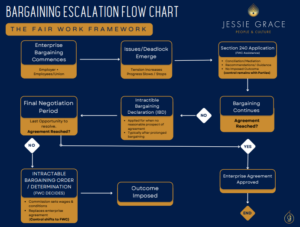
Enterprise Bargaining Escalation Flowchart Australia | Fair Work Commission Process

Enterprise bargaining in Australia has become more structured, with clearer escalation pathways through the Fair Work Commission when negotiations stall. This flowchart provides a practical, step-by-step view of how bargaining progresses, from initial negotiations through to Section 240 assistance and, if required, intractable bargaining determinations.

Designed for employers operating in high-risk and complex environments, this resource helps clarify when control remains with the parties and when it shifts to the Commission. It is a simple way to understand how disputes escalate, what triggers intervention, and where the real risks sit if agreement cannot be reached.

Get practical HR insights that keep your business on track

Yes, but only if you’ve followed a fair process. This means setting clear expectations, giving feedback, providing a genuine opportunity to improve, and documenting every step. Terminations that skip this process often get overturned at the Fair Work Commission.

Start by identifying whether the absences are authorised (such as sick leave) or unauthorised. If absences are excessive or patterns emerge, meet with the employee, document the discussion, and explore underlying causes. If the issue persists, you may escalate to formal warnings or a performance management process.

Poor performance relates to not meeting role expectations (e.g. quality or output), while misconduct involves breaches of behaviour or conduct standards (e.g. theft, harassment, safety breaches). The processes differ: misconduct often triggers disciplinary action, while poor performance requires a performance improvement process.

Not legally in every case, but warnings are a key part of showing procedural fairness. For performance issues, written warnings are best practice. For serious misconduct (e.g. theft, assault), you may move to termination without prior warnings — but only after a fair investigation.

Failure to follow lawful and reasonable directions may amount to misconduct. Employers should meet with the employee, clarify expectations, and document the refusal. If it continues, disciplinary action (including termination) may be justified, but ensure you follow due process.

Rushing to termination without a fair process exposes you to unfair dismissal, general protections, or discrimination claims. Even if the substantive reason is valid, skipping procedural fairness can make the dismissal unlawful. The result being a claim that could cost up to 6 months of the employees wages (more if the dismissal deemed to be discriminatory). Taking the time to follow process protects both the business and its culture.

Get practical HR insights that keep your business on track